
The useful guide to artificial intelligence
AI changes weekly.
Start here anyway.
Current models, real costs, complete guides, local hardware, useful projects, and the communities where people are doing the work.
Choose a section
Find what you need to learn or decide
 ModelsChoose a current frontier model
Compare OpenAI, Anthropic, Google, and xAI by access, cost, context, and actual workload fit.
Explore section → GuidesLearn by finishing useful work
Complete guides for first use, APIs, model evaluations, document Q&A, and safe agents.
Explore section → Local AIRun capable models on your hardware
Understand memory, software, privacy, DGX Spark, Mac Studio, RTX desktops, and professional workstations.
Explore section → IdeasBuild something with an outcome
Practical work and private local projects with a small first version and a visible success test.
Explore section →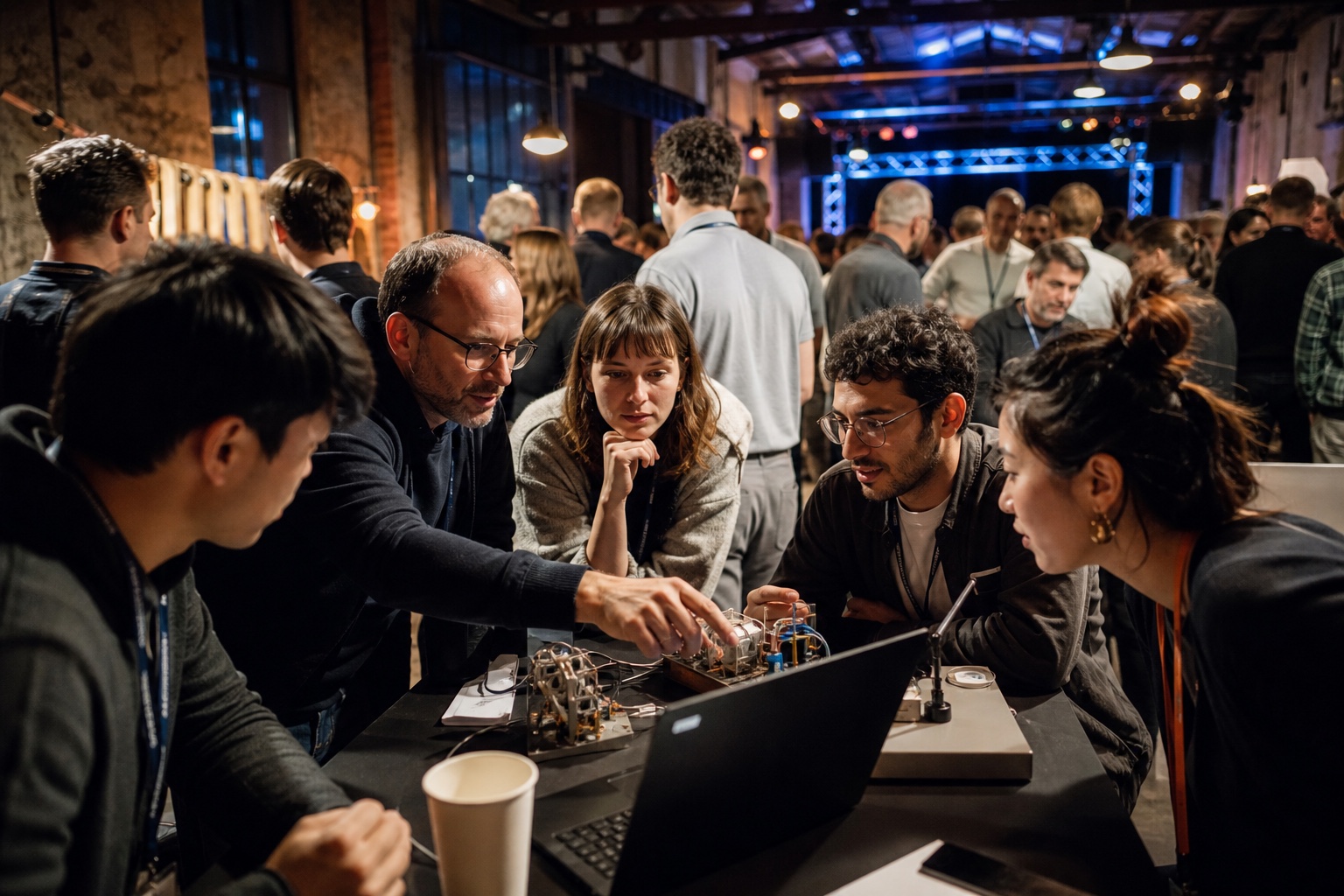 CommunityFind conferences and user groups
Research events, builder conferences, practitioner communities, open-model groups, and local chapters.
Explore section →Possibilities, not hype
What will you do with it?
The useful question is not what AI can do in theory. It is what you can finish, understand, test, or share this week.
Current reference pages
Start with what changed
Model and hardware pages are dated, linked to primary sources, and written to answer a specific search or purchase question.
A practical guide to the GPT-5.6 model family, including Sol, Terra, Luna, API pricing, context limits, reasoning settings, access, and workload selection.
Read 9 minute guide →ModelsClaude Fable 5, Opus 5, and Sonnet 5: what each model is forCompare Anthropic's Claude Fable 5, Opus 5, and Sonnet 5 models by access, price, context, latency, coding ability, and production use.
Read 8 minute guide →ModelsGemini 3.1 Pro and Gemini 3.6 Flash for multimodal and agentic workA practical guide to Gemini 3.1 Pro Preview and Gemini 3.6 Flash, including multimodal capabilities, API access, 1M context, pricing tiers, and workload choice.
Read 8 minute guide →ModelsGrok 4.5: pricing, access, search tools, and practical use casesLearn when to use Grok 4.5, how to access it through Grok and the xAI API, what token and long-context pricing costs, and where search tools change the workflow.
Read 7 minute guide →Local AINVIDIA DGX Spark for local AI: what it runs and how to set it upA complete NVIDIA DGX Spark guide covering the GB10 chip, 128 GB unified memory, current price, model fit, first boot, Ollama, LM Studio, llama.cpp, networking, and benchmarks.
Read 16 minute guide →GuidesHow to start using AI and get a result you can trustA complete beginner's guide to using ChatGPT, Claude, Gemini, or Grok for a real task, including prompt structure, source checking, privacy, and a practical first exercise.
Read 10 minute guide →A practical standard
Use AI deliberately, not automatically
- Start with a real task and a visible success test.
- Use the least expensive model that reliably passes.
- Keep private data inside an approved boundary.
- Check current prices, access, and specifications at the original source.