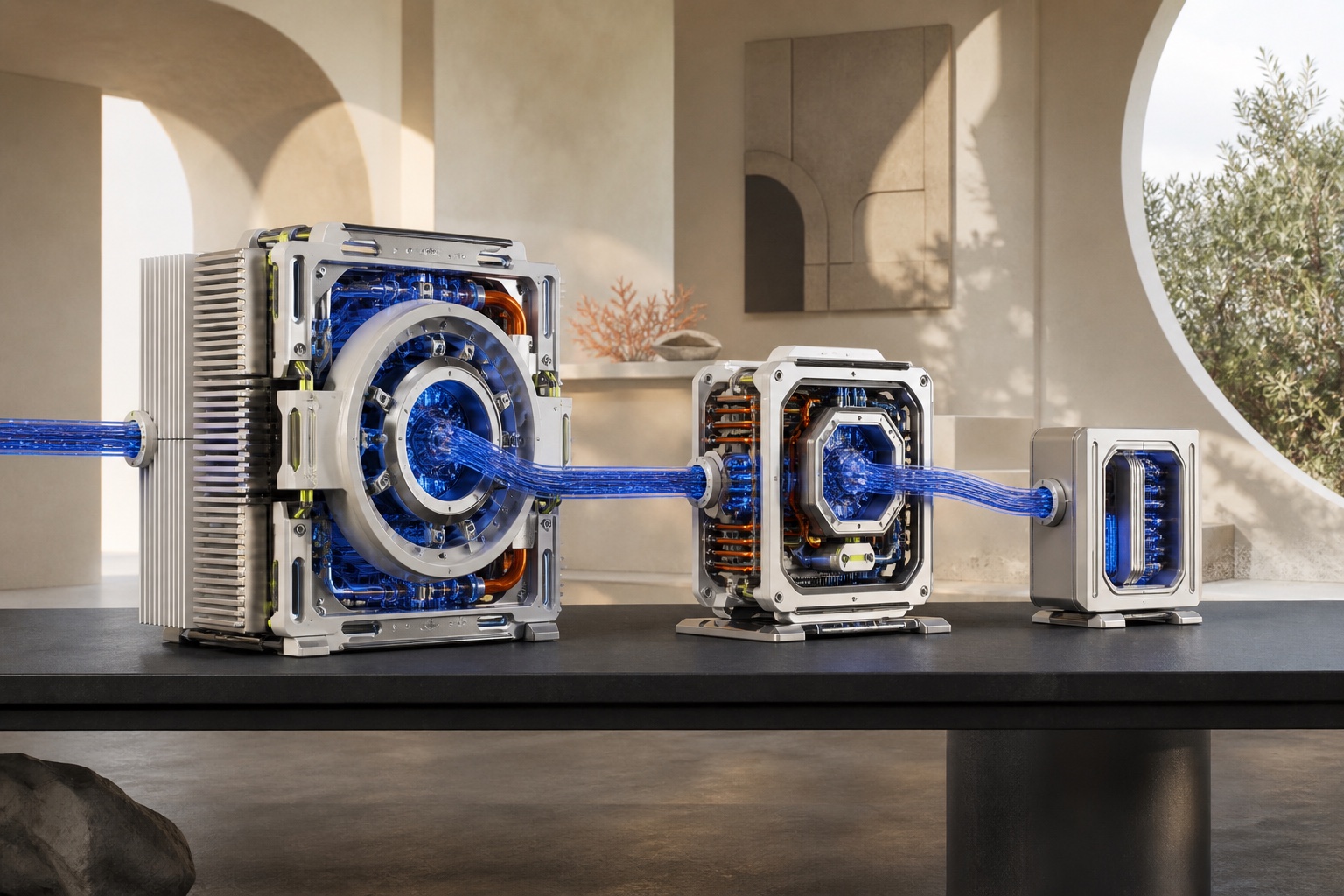
GPT-5.6 is a family rather than a single cost profile. Sol is the quality-first flagship, Terra is the balanced production choice, and Luna is optimized for cost-sensitive high-volume work. The family is available through the OpenAI API, with GPT-5.6 also available across ChatGPT and Codex subject to product plan and usage limits.
Do not default every request to Sol. Most production systems should begin with Terra, test Luna for routine work, and escalate to Sol when a representative evaluation shows a meaningful improvement.
What changed in GPT-5.6
OpenAI positions GPT-5.6 as the current baseline for complex production work, with improved token efficiency, tool use, coding, and design judgment. The API supports reasoning efforts from none through max, plus a pro execution mode that applies more model work before returning one answer.
The family supports the Responses API, function calling, structured outputs, image input, and OpenAI-hosted tools such as web search and file search. Sol, Terra, and Luna share the large context and output limits, making model selection primarily a quality, latency, and cost decision.
Use Sol, Terra, and Luna for different work
Use Sol for difficult professional reasoning, complex coding, tool-heavy agents, and high-value analysis where the cost of a wrong answer dominates the token price. Use Terra as the first production candidate for assistants, code workflows, research, and structured knowledge work. Use Luna for classification, extraction, routing, summarization, and high-volume tasks with objective outputs.
- Start a new workload on Terra with medium reasoning.
- Compare Luna when the output is easy to score and throughput matters.
- Escalate to Sol only on cases that fail the lower-cost tier.
- Pin a specific model version or monitor aliases if output stability matters.
Access and cost controls
Create an API project and key in the OpenAI platform, then set project limits and usage alerts before integrating it. API charges are separate from ChatGPT subscriptions. Cached input is discounted, while some GPT-5.6 cache writes have their own rate; requests with very large prompts can also enter a higher price tier.
Track input, cached input, output, reasoning tokens, tool calls, latency, and pass rate together. A cheaper request that causes a retry or a human cleanup step may be more expensive operationally than a stronger first pass.
A useful default is GPT-5.6 Terra at medium reasoning, evaluated against Luna and Sol on the same task set.
Primary sources